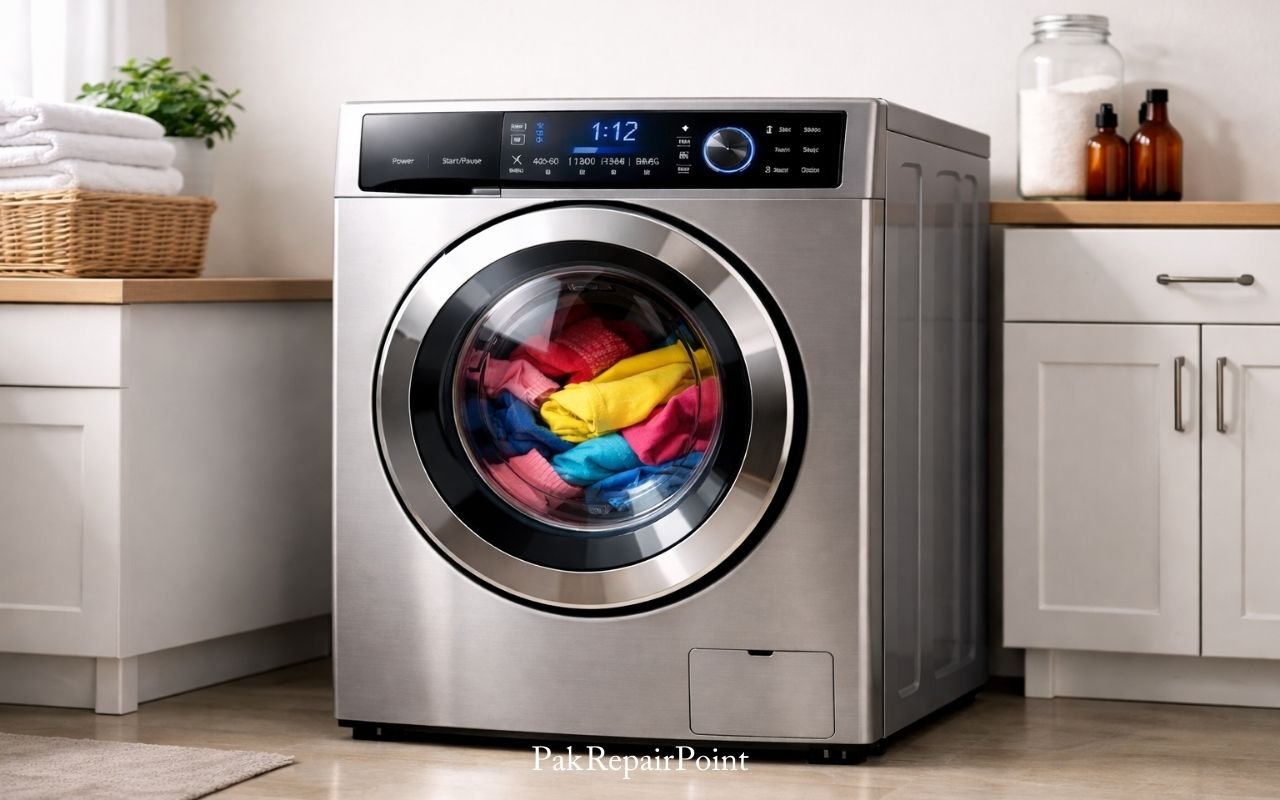
An automatic washing machine is one of the most widely used household appliances in modern homes. It is designed to clean clothes efficiently while reducing physical effort, time consumption, and water wastage.
Unlike manual or semi-automatic systems, this machine performs most tasks independently once the user selects the appropriate settings.
Over the years, automatic washing machines have evolved significantly. Early models focused only on basic washing, while modern machines now offer fabric-specific programs, energy efficient operations, and intelligent sensors. Understanding how these machines work helps users make better choices and use them more effectively.
If you want expert advice on automatic washing machines or repair services, visit Pak Repair Point for more information.
Understanding an Automatic Washing Machine
An automatic washing machine is a self-regulated laundry appliance that completes washing, rinsing, and spinning without the need for constant user intervention. After loading clothes and detergent, the user selects a program, and the machine controls the entire process internally.
Key Characteristics of Automatic Washing Machines
Automatic washing machines are defined by several core characteristics:
- They regulate water intake and drainage automatically
- Wash cycles are pre-programmed
- Minimal manual handling is required
- Cleaning quality remains consistent
These features make them suitable for households where time efficiency and hygiene are priorities.
Main Components of an Automatic Washing Machine
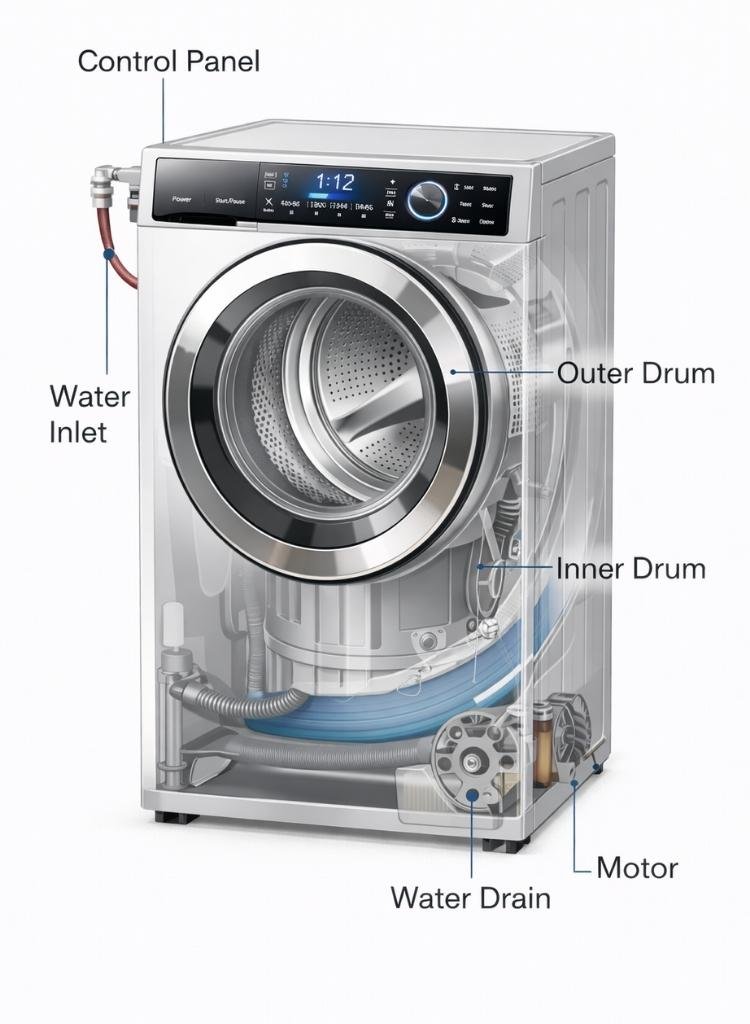
To understand how the machine works, it is important to become familiar with its major components. Each part plays a specific role in the washing cycle.
Inner Drum
The inner drum is the compartment where clothes are placed. It is usually made of stainless steel and contains small perforations that allow water to enter and exit during washing and rinsing.
Outer Drum
The outer drum holds water and supports the inner drum. It prevents leakage and directs used water toward the drainage system.
Motor and Belt System
The motor controls the rotation of the drum. In some machines, belts are used to transfer power, while others rely on direct drive motors for quieter operation.
Water Inlet Valve
This valve controls the amount of water entering the machine. It opens and closes automatically based on the selected wash cycle.
Control Panel
The control panel allows users to select wash programs, water levels, and spin speeds. In modern machines, this panel may include digital displays and touch controls.
How Does an Automatic Washing Machine Work?
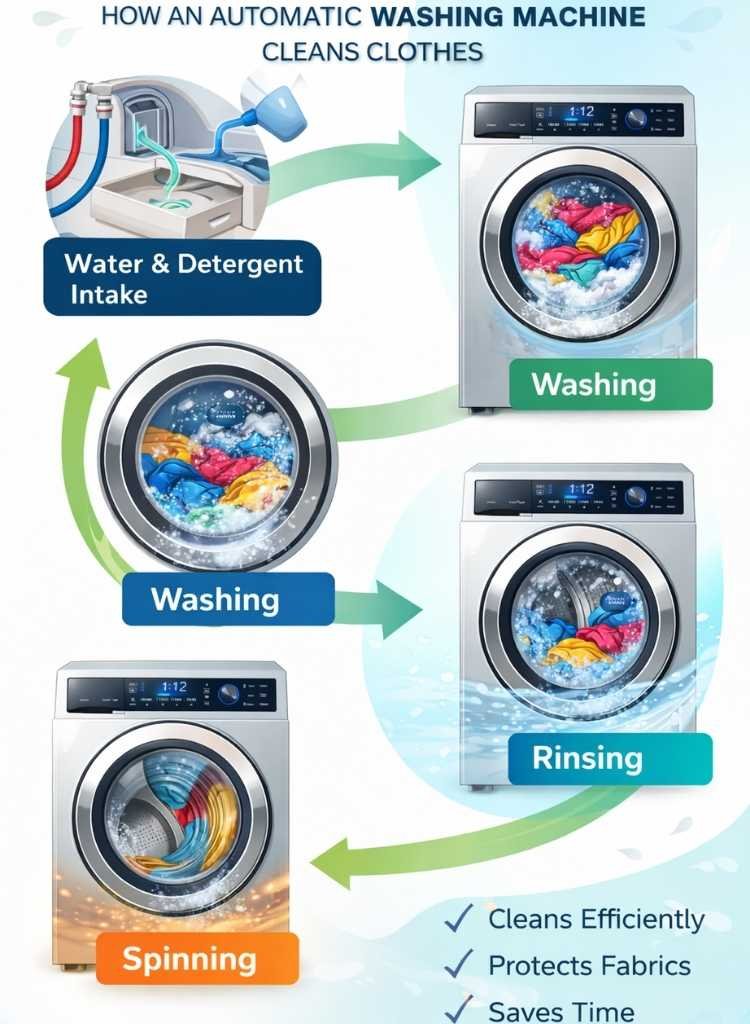
The working process of an automatic washing machine follows a carefully designed sequence. Each stage contributes to effective cleaning and fabric care.
Water Intake and Load Detection
Once the cycle begins, the machine measures the weight of the laundry. Based on this information, it allows a specific amount of water to enter the drum. This helps prevent unnecessary water use.
Detergent Activation and Washing Phase
Detergent dissolves into the water, creating a solution that penetrates fabric fibers. The drum then begins rotating in alternating directions, ensuring that clothes rub against each other gently to loosen dirt.
Rinsing Cycle
After washing, the dirty water is drained out. Clean water enters the drum to rinse away detergent residue. Some machines perform multiple rinse cycles for better cleanliness.
Spinning and Moisture Removal
During spinning, the drum rotates at high speed. Centrifugal force pushes water out of the clothes through the drum holes, reducing moisture content significantly.
Types of Automatic Washing Machines
Automatic washing machines are available in different designs. Each type serves specific user needs.
Top Load Washing Machines
Top load machines are loaded from the top and are generally easy to operate. They are suitable for users who prefer shorter cycles and less bending.
Advantages
- Easy loading and unloading
- Faster wash cycles
- Lower initial cost
Limitations
- Higher water usage
- Slightly lower energy efficiency
Front Load Washing Machines
Front load machines open from the front and rely on gravity and drum rotation for cleaning.
Advantages
- Better cleaning performance
- Lower water and energy consumption
- Gentler on fabrics
Limitations
- Longer wash cycles
- Higher upfront cost
Wash Programs and Their Purpose
Automatic washing machines offer various wash programs designed for different fabric types and soil levels.
Cotton and Linen Program
This program uses stronger drum movement and higher water levels, making it suitable for durable fabrics.
Delicate and Wool Program
Lower spin speeds and gentle movement protect sensitive fabrics from damage.
Quick Wash Program
This program is designed for lightly soiled clothes that need refreshing within a short time.
Role of Sensors and Automation
Modern automatic washing machines use sensors to improve efficiency and safety.
Load Sensors
These sensors detect the weight of laundry and adjust water usage accordingly.
Temperature Sensors
They regulate water temperature to protect fabrics and improve detergent performance.
Imbalance Sensors
These sensors prevent excessive vibration by redistributing clothes evenly during spinning.
Energy and Water Efficiency
Energy efficiency is a major advantage of automatic washing machines. Many models are designed to meet international energy standards.
Reduced Water Consumption
Front load machines, in particular, use significantly less water compared to older washing methods.
Electricity Optimization
Energy-efficient motors and controlled heating systems help reduce electricity usage.
Hygiene and Health Benefits
Automatic washing machines contribute to improved household hygiene.
Removal of Allergens
High-temperature wash cycles help eliminate bacteria, dust mites, and allergens.
Consistent Cleaning Results
Standardized wash programs ensure clothes are cleaned uniformly every time.
Maintenance and Care of Automatic Washing Machines
Proper maintenance extends the life of the machine and ensures consistent performance.
Regular Drum Cleaning
Cleaning the drum prevents odor buildup and detergent residue.
Filter Inspection
Filters should be checked periodically to avoid drainage issues.
Proper Detergent Use
Using the recommended detergent quantity prevents excess foam and mechanical stress.
Common Problems and Practical Solutions
Even advanced machines may face occasional issues.
Machine Not Draining Water
This often occurs due to clogged filters or drainage pipes.
Excessive Noise During Spin
Uneven load distribution is a common cause of vibration and noise.
Importance of Automatic Washing Machines in Modern Society
Automatic washing machines have transformed household labor. They allow individuals to focus on work, education, and family life while maintaining cleanliness standards.
In urban environments, where time and resources are limited, these machines play a vital role in daily living. Their ability to conserve water and energy also supports environmental sustainability.
Conclusion:-
An automatic washing machine is more than just a convenience. It is a practical solution that improves hygiene, saves time, and reduces physical effort. By understanding how it works and how to maintain it properly, users can maximize its benefits and ensure long-term performance.
Leave a Reply